
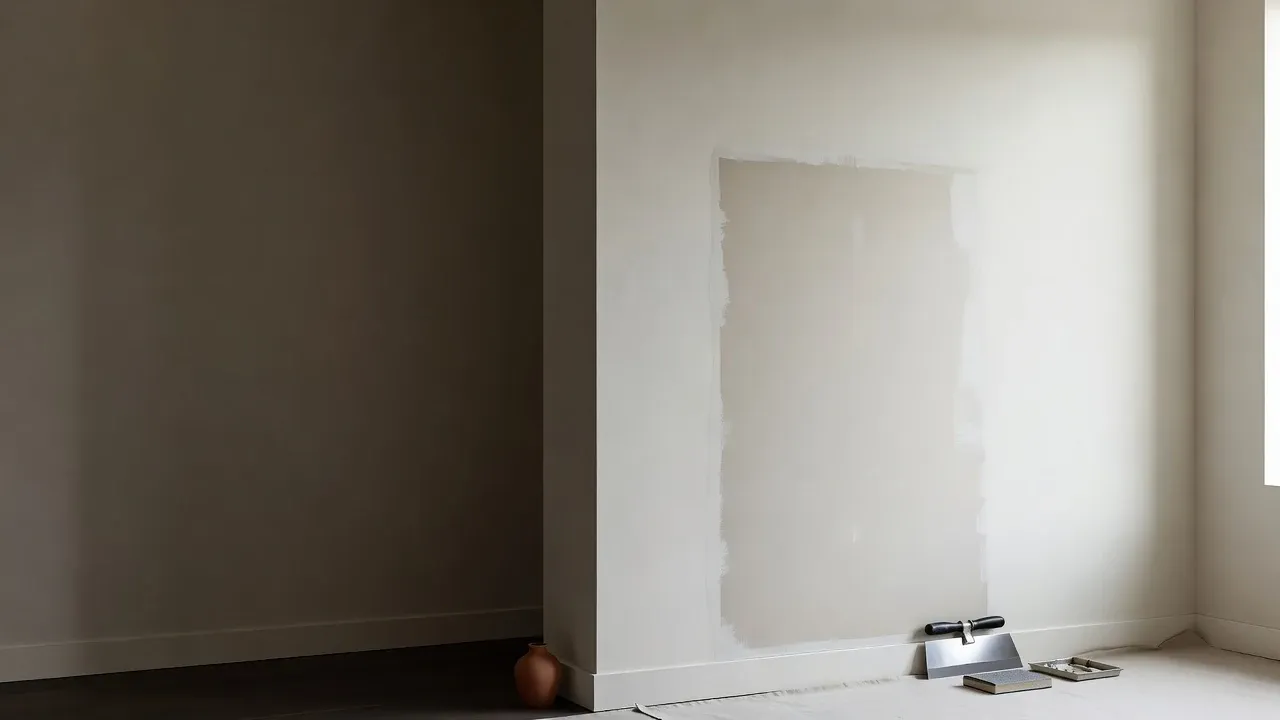
Drywall repair starts with the material around the damage. Utah Drywall & Repair assesses backing, board thickness, loose paper, failed tape, old patch layers, texture, and the finish around the opening before deciding how large the repair should be.
Request a Drywall Repair Estimate or call 801-406-6350.
Drywall Problems This Service Covers
- Doorknob, impact, anchor, and hardware holes
- Plumbing, electrical, mechanical, or inspection access cuts
- Cracks and recurring joint lines
- Loose, bubbled, or split drywall tape
- Torn face paper and crushed gypsum
- Damaged outside corners and corner bead
- Partial panels opened during a remodel
- Ceiling patches that do not involve an active moisture source
- Previous repairs that need a broader, cleaner finish transition
For overhead work, review ceiling drywall repair. If moisture caused the damage, start with the water-damage drywall repair page.
Patch or Replace a Larger Section?
A small visible hole does not always mean a small finish area. The decision depends on what remains solid enough to support a durable repair.
A localized patch may fit when
- the surrounding board is firm and dry;
- the opening can be squared to stable edges;
- proper backing can be installed;
- replacement board can match the existing thickness; and
- the joint and texture can be blended over a reasonable area.
A larger replacement may be better when
- gypsum is crushed beyond the visible edge;
- paper has separated or torn over a broad area;
- several old patches overlap;
- the board is soft, swollen, or moisture-damaged;
- a crack follows an unstable seam; or
- there is no practical way to support the patch without opening the area farther.
A California-style patch can be useful in limited situations, but it is not the default answer for every hole. Size, location, impact risk, texture, and backing still matter. The patching techniques guide explains why a low-profile patch is a goal rather than an invisible-match promise.
How a Drywall Repair Is Built
1. Inspect the damage and its cause
The team looks at the full surface, not just the broken center. Tell the team whether the opening came from impact, a trade access cut, water, movement, or a remodel. Active leaks and unresolved sources need attention before drywall is closed.
2. Remove loose material and establish sound edges
Loose paper, crumbling gypsum, weak tape, and unstable compound should not be buried under a new coat. The opening is shaped around material that can hold the repair.
3. Add backing and match the board
Backing keeps the patch supported. Matching board thickness helps the new face meet the existing plane without creating a ridge or low area.
4. Tape, coat, and feather the repair
Tape and compound are built in controlled layers. Feathering spreads the transition beyond the opening so the edge does not stop the eye at a narrow hump.
5. Sand and inspect under light
Sanding should remove ridges without cutting into tape or damaging surrounding paper. Directional light helps reveal edges and low spots before the finish moves forward.
6. Recreate or blend the texture
Orange peel, knockdown, smooth wall, skip trowel, and other finishes need different tools and blend widths. The repaired area may need texture beyond the patch itself. See drywall texturing and texture matching.
7. Confirm primer and paint handoff
Fresh compound absorbs coatings differently from painted drywall. The scope should state whether the surface is left ready for primer, receives texture, or includes paint matching. Color and sheen both affect the final appearance.
Protection in Occupied Rooms
When the repair requires dust containment, the team uses tarps and appropriate containment and protection measures. Before work begins, clear small belongings and explain any access limits, fixed furniture, sensitive equipment, or building rules. Ceiling work and broad sanding may need more room protection than a small wall patch.
What Affects Scope and Schedule
Repair size is only one driver. Backing, height, access, board thickness, texture, previous repairs, drying between coats, paint matching, and the number of separate areas all affect the work.
Small repairs can usually be scheduled within 24 hours. Larger or multi-room repair projects are usually scheduled within one to two weeks. These are typical scheduling windows, not guarantees.
What to Send for an Estimate
- A photo showing the entire wall or ceiling.
- A close-up of each damaged area.
- Rough height and width measurements.
- The cause of the damage if known.
- The room type and whether the surface is wall or ceiling.
- A note about texture, paint plans, height, furniture, and access.
Common Questions
Can you repair drywall after a plumber or electrician makes access holes?
Yes. Access cuts are a common repair type. Leave the cut pieces if they are sound and available, but new board may still be the better choice. Confirm that the trade work is complete before the opening is closed.
Can you fix a crack by adding more mud?
Sometimes a surface crack needs only localized finishing, but cracks can also follow failed tape, a loose seam, or movement. The cause and stability should be assessed before covering it again.
Will the texture and paint match exactly?
Texture and paint can often be blended, but an exact match should not be promised before the existing finish is assessed. Texture age, paint buildup, sheen, and natural light can expose transitions. A broader blend or full-surface finish may produce a cleaner result in some rooms.
Do you repair water-damaged drywall?
Yes, after the moisture source is handled and the area is ready for reconstruction. Soft or swollen board usually needs to be removed back to sound material. Mold assessment or remediation, when needed, is separate from ordinary drywall reconstruction.
Is workmanship guaranteed?
Utah Drywall & Repair guarantees its workmanship. The estimate or project agreement should document the applicable scope and any remedy without assuming an unverified fixed warranty duration.
Get a Repair Scope Built Around the Existing Surface
Send photos, measurements, the cause of the damage, and your finish expectations. The team can review whether the area looks suited to a patch, broader replacement, or on-site assessment.
Request a Drywall Repair Estimate or call the correct number through the service areas directory.