
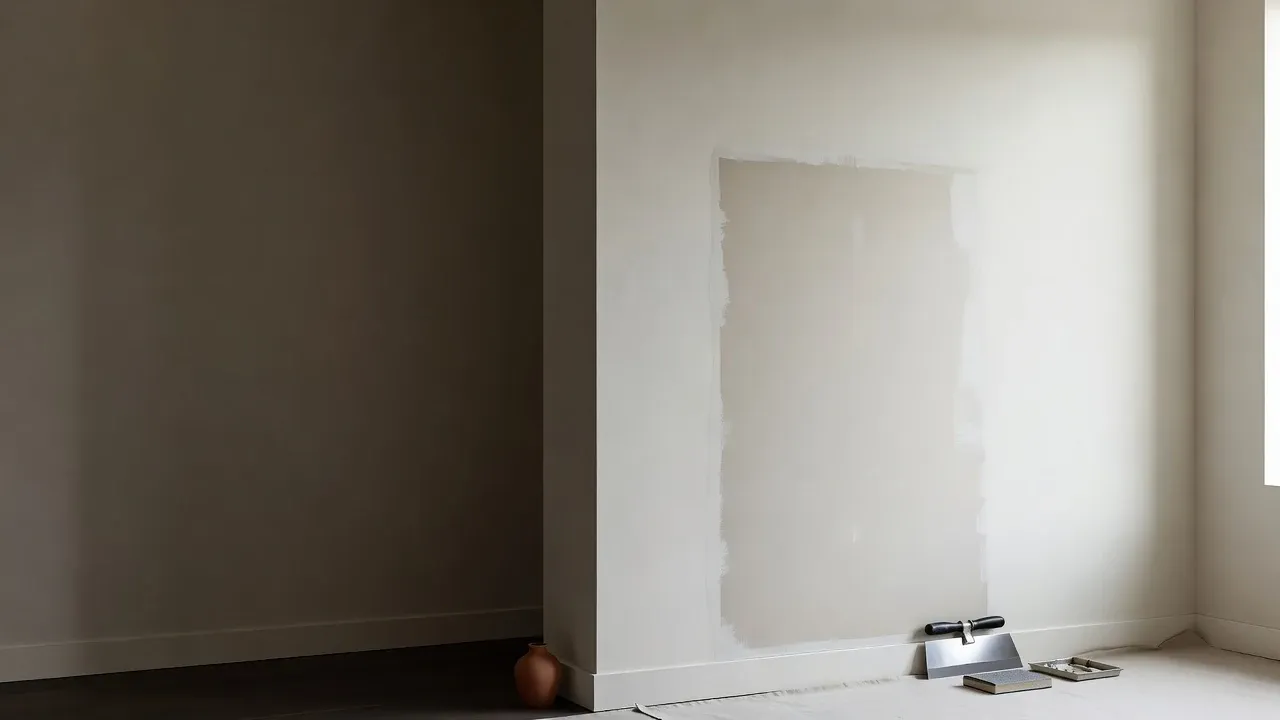
Repair, Replace, or Refinish?
The hole is only part of the story. The condition around it determines whether the cleanest fix is a patch, a larger replacement, or broader surface work.
- Repair may fit when the surrounding board is sound, the opening can be supported, and the patch can be finished without creating a worse transition.
- Replace a larger section may be more practical when gypsum is crushed or soft, paper is delaminated, multiple patches overlap, backing is weak, or seams need to land on solid framing.
- Refinish a broader area may be needed when the board is stable but the existing compound, texture, or skim surface has widespread problems.
- Install new board may be the right path for an unfinished room, a remodel with open framing, or an area where damaged material has already been removed.
Photos help establish the likely direction, but access, backing, thickness, moisture history, and lighting can change the final plan.
How the Work Is Assessed
Existing condition
The estimate should identify the damaged area, stable edges, framing or backing, board thickness, previous repairs, texture pattern, paint plans, and the source of any opening or stain.
Finish expectation
A utility room, a smooth feature wall, a textured ceiling, and a brightly lit hallway do not expose the surface in the same way. Finish scope should fit the room and the intended coating.
Protection and access
Tell the team whether the area is occupied, furnished, high, tight, behind fixed equipment, or subject to building access rules. Tarps and containment are used when the project requires dust protection.
Handoff
Confirm whether the agreed work ends at installed board, finished drywall, texture, primer-ready surface, or includes paint matching. Proper finishing after drywall is part of the team’s core experience, but every handoff should be explicit.
Typical Scheduling
Small repairs can usually be scheduled within 24 hours. Larger projects are usually scheduled within one to two weeks. These are typical windows rather than guaranteed start times. Scope, service area, access, materials, and current project commitments all affect scheduling.
Who Will Be Doing the Work
Utah Drywall & Repair is backed by more than 20 years of drywall experience. The team guarantees its workmanship on the drywall and finish work included in the written estimate.
Common Questions
Can I request more than one service in the same estimate?
Yes. A project may combine removal, installation, repair, finishing, texture, and paint matching. List each surface and the finish you expect so the scope can be organized correctly.
Do you only handle residential work?
No. Work includes homes and commercial facilities of all project and building types, including restaurants and offices. Use the commercial page when access, plans, other trades, operating hours, or turnover dates are part of the job.
What photos are most useful?
Send one photo of the full wall or ceiling, one closer view of the damage or unfinished area, and photos showing nearby corners, trim, fixtures, or openings. Include rough dimensions when possible.
Can a patch be guaranteed to disappear completely?
No responsible scope should promise that before seeing the surface. Board, texture, paint sheen, age, prior repairs, and directional light affect how a transition reads. The goal is a properly built and blended repair with realistic expectations.
Choose a Service or Send the Whole Scope
If you already know the service, use the matching page above. If the project crosses several categories, send the details through the estimate form and let the team review the sequence.
Request an Estimate or explore service areas and regional phone routing.