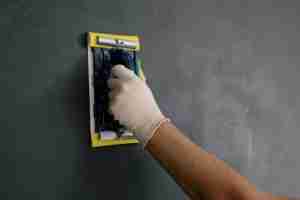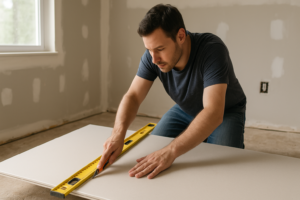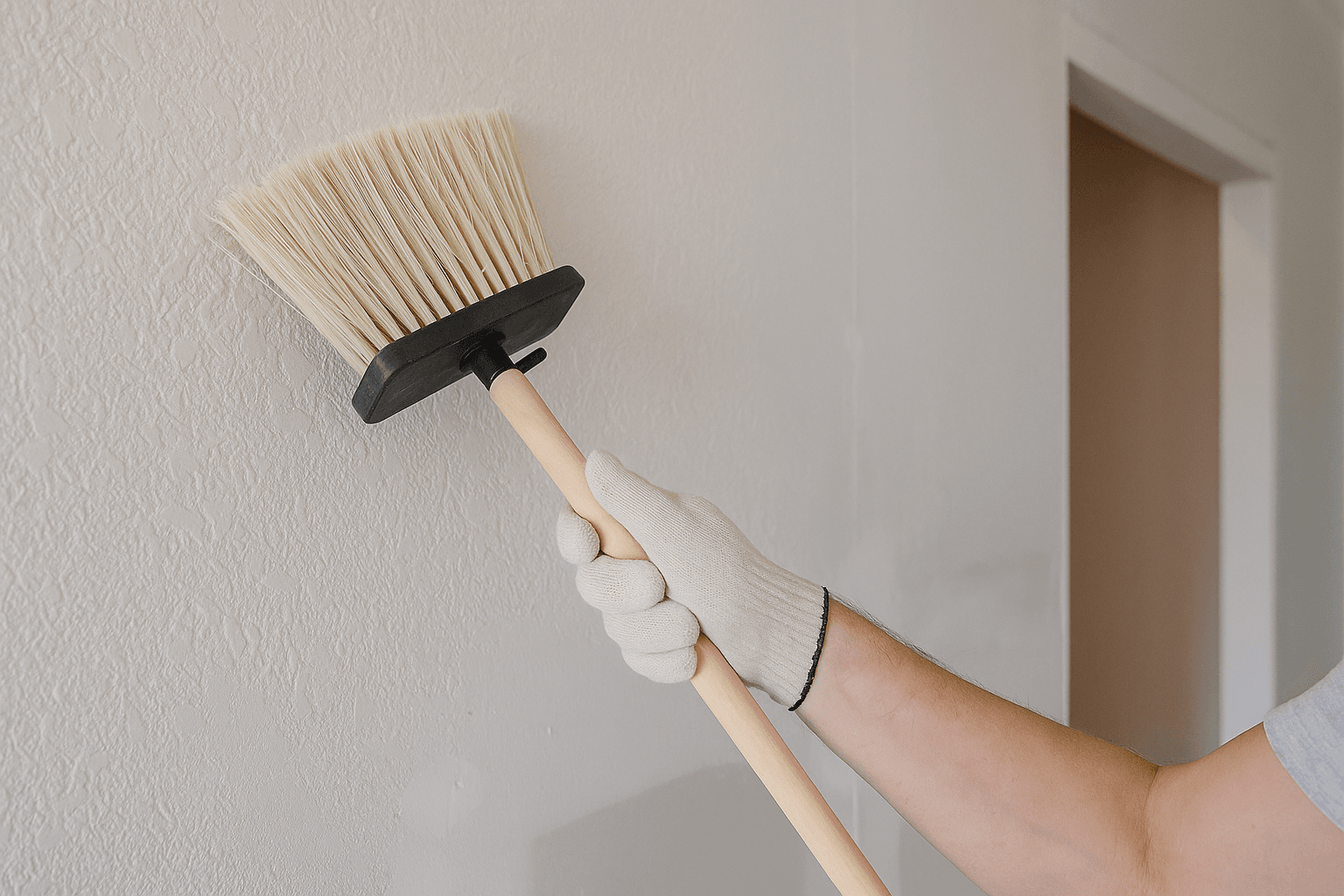
Have you ever stared at a wall in your home and thought it just looked a little too… naked? Adding texture is one of the most effective ways to bring character to a room while cleverly hiding those annoying little nicks and imperfections that inevitably settle in over time. It is the subtle difference between a house that feels like a sterile box and a home that feels warm, finished, and lived-in.
Contents
- 1 Why Bother with Texture Anyway?
- 2 Understanding the Local Vibe: Textures in Utah
- 3 The “Big Three” Explained
- 4 Preparation: The Step You Can’t Skip
- 5 Getting the Mix Right
- 6 Tools of the Trade
- 7 Troubleshooting Common Issues
- 8 Painting Textured Walls
- 9 Should You DIY or Call a Pro?
- 10 Let’s Get Those Walls Looking Right
Why Bother with Texture Anyway?
Here’s the thing about smooth walls: they are unforgiving. I mean really unforgiving. If your drywall framing isn’t perfectly straight (and let’s be honest, in older homes throughout Salt Lake County, nothing is perfectly straight), a smooth wall will highlight every wave, bump, and screw pop.
Drywall Texturing isn’t just an aesthetic choice; it is a practical magic trick. It diffuses light, adds depth, and significantly reduces the maintenance needed to keep your walls looking pristine. If you have kids or pets, you know that walls take a beating. A good texture makes those inevitable scuffs and dings much less noticeable than they would be on a Level 5 smooth finish. Plus, it aids in sound dampening. It won’t soundproof a room entirely, but it certainly helps cut down on that hollow echo you get in empty, smooth-walled rooms.
Understanding the Local Vibe: Textures in Utah
You know what? Geography actually plays a role here. In humid climates, people can get away with certain techniques that are a nightmare in the high desert. Here in Davis County and Utah County, the air is dry. Like, really dry. This affects how the joint compound—or “mud”—dries.
If you try to apply a texture that is too heavy or wet without the right prep, the outside skins over while the inside stays wet, leading to crazing (tiny cracks). Working in our climate requires a bit of speed and a specific mix consistency.
Let’s look at the most common styles we see around the valley.
Popular Texture Styles
| Texture Style | Difficulty Level | Best Used For |
|---|---|---|
| Orange Peel | Beginner/Intermediate | Rental properties, modern homes, and quick renovations. |
| Knockdown | Intermediate | Living rooms and hallways. Adds a warm, Mediterranean feel. |
| Skip Trowel | Advanced | High-end custom homes. It hides imperfections beautifully. |
The “Big Three” Explained
Let me break these down a bit more because picking the right one changes the whole feel of the room.
The Classic Orange Peel
You’ve seen this one a million times. It looks exactly like the skin of an orange. It’s bumpy but soft. We spray this on using a hopper gun and an air compressor. The beauty of orange peel texture is that it is subtle. It doesn’t scream “look at me,” but it breaks up the flat surface enough to make Painting easier. It’s the standard for a reason.
Knockdown Texture
This is probably the most requested style we handle at Utah Drywall & Repair. It starts like orange peel—we spray globules of mud onto the wall—but then, and this is the tricky part, we wait. We let it set up for just the right amount of time (which changes depending on if it’s raining or if the heater is on), and then we run a wide drywall knife over it to “knock down” the peaks. The result is a flattened, mottled look that feels a bit more sophisticated.
Skip Trowel (The Artisan’s Choice)
Honestly, this is my personal favorite. There is no spray gun involved here. This is done by hand with a hawk and trowel. We apply the mud and “skip” the trowel across the surface, leaving irregular patches of texture. It looks a bit like old-world plaster or stucco. Because it’s hand-applied, every wall is unique. It’s fantastic for hiding waves in older lath-and-plaster homes in the Avenues or Sugar House.
Preparation: The Step You Can’t Skip
You might be tempted to just grab a hopper and start spraying, but trust me, that is a recipe for disaster. Drywall mud goes everywhere.
Protection is 90% of the job.
Before we even think about mixing mud, we cover everything. Floors need heavy-duty paper or drop cloths. Windows need to be masked off with plastic. Outlets? Tape them up. If you don’t mask properly, you will be scraping dried mud off your baseboards for the next three years. It gets into the grain of the wood, and it does not want to come out.
Also, the walls need to be primed or at least clean. If you try to texture over a dusty surface, the mud won’t bond. It’ll bubble up and flake off later. That’s a headache nobody wants.
Getting the Mix Right
Here is where the art meets the science. Drywall compound comes in a box or a bucket, usually as a thick paste. You can’t spray it like that. You have to dilute it with water.
But how much water? Well, that depends on the texture you want.
- For Orange Peel: You want a consistency like thin pancake batter. It should drip off the mixing paddle easily but not splash like water.
- For Knockdown: You want it slightly thicker, maybe like creamy tomato soup. It needs enough body to stand up so you can knock it down later.
You have to use a heavy-duty drill and a mixing paddle. Doing this by hand is impossible unless you have forearms like Popeye. You need the mix to be perfectly smooth. One little chunk of dried mud can clog the nozzle of your spray gun, and suddenly you’re blasting a solid stream of goop onto the wall instead of a nice mist.
Tools of the Trade
If you are thinking about DIY-ing this, you need to know what you are up against regarding equipment.
- Air Compressor: You can’t use the little pancake compressor you use for a brad nailer. You need a compressor that provides a high volume of air (CFM), not just high pressure (PSI). If the compressor can’t keep up, the spray pattern changes halfway through the wall, and it looks terrible.
- The Hopper Gun: This holds the mud and uses the air to blast it out.
- Knockdown Knife: A wide (10-12 inch) flexible blade.
- A Hawk: That flat metal plate with a handle underneath for holding mud.
You know what? Even with the best tools, it takes a “feel.” You have to move your arm at a consistent speed. If you slow down, the texture gets too heavy. If you speed up, it gets too light.
Troubleshooting Common Issues
Even the pros run into snags sometimes. The difference is knowing how to fix them before the mud dries.
1. The “Runny” Wall
If you mix the mud too thin or spray too much in one spot, it will start to slide down the wall. Gravity is undefeated. If this happens, you have to scrape it off immediately, let the wall dry, and try again. Do not try to paint over it; it will look like a melted candle.
2. The Pattern Doesn’t Match
This happens when you do a patch repair. You fixed a hole from a doorknob, and now you need to texture just that one square foot. Getting the spray pressure and mud thickness to match the existing wall perfectly is incredibly difficult. We often recommend feathering the texture out wide to blend it in, tricking the eye.
3. Cracking Mud
This is a classic Utah problem. If you apply the texture too thick in a hot room, the surface dries fast, shrinks, and cracks. We mitigate this by controlling the room temperature and, in some cases, using a setting-type compound (hot mud) that hardens chemically rather than just by drying.
Painting Textured Walls
Once the texture is up and dry (give it 24 hours, seriously), you aren’t done. You have to paint it. And painting textured walls is thirsty work. The texture increases the surface area of the wall, which means you will use more paint than you think.
Pro Tip: Use a thick nap roller (3/4 inch). A standard thin roller won’t get the paint into the valleys of the texture, leaving you with annoying little white speckles everywhere. You really have to saturate the roller and work the paint in.
Should You DIY or Call a Pro?
Look, I’m all for homeowners getting their hands dirty. It’s satisfying to fix up your own place. But drywall texturing is one of those tasks that has a massive learning curve. It looks easy on YouTube, but holding a hopper gun filled with 15 pounds of wet mud above your head while trying to walk backward in a straight line… it’s a workout.
If you mess up painting, you can just paint over it. If you mess up texturing, you have to sand it all down (which creates an ungodly amount of dust) or skim coat the whole wall and start over. It is messy, physically demanding, and requires a touch that usually only comes with experience.
Sometimes, the cost of renting the compressor, buying the hopper, getting the mud, and buying the plastic to cover your furniture ends up being pretty close to the cost of just having us come in and knock it out in a day. Plus, we clean up the mess.
Let’s Get Those Walls Looking Right
Whether you are finishing a Basement in Sandy, Remodeling a kitchen in Layton, or just fixing some wear and tear in Provo, the right texture makes all the difference. Your home deserves that finished, professional look that stands up to daily life.
Don’t spend your weekend fighting with a spray gun and scraping mud off your floors. Let the experts handle the heavy lifting (and the cleanup).