You’ve watched the videos, bought the five-gallon bucket, and now you’re staring at a wall that looks like a patchwork quilt of gray board and Tape. It looks deceptively easy when the pros do it, doesn’t it? But getting that smooth, glass-like finish with drywall joint compound—or “mud” as we call it in the trade—is more of an art form than simple construction work.
Contents
Understanding What’s in the Bucket
Before we even crack the lid, we need to talk about what you are actually putting on your walls. A lot of homeowners in Salt Lake County head down to the big box store and grab the first bucket they see, assuming mud is mud. But that’s a recipe for frustration.
Honestly, there are two main families of joint compound, and picking the wrong one is where most DIY projects go sideways.
- Drying-Type Compound: This is the pre-mixed stuff you find in buckets and boxes. It hardens as the water evaporates. Since we live in a desert here in Utah, this usually works in your favor, drying faster than it would back East.
- Setting-Type Compound (Hot Mud): This comes in a powder and you mix it with water. It hardens via a chemical reaction, not just evaporation. It actually gets warm to the touch!
Why does this matter? Well, if you use “hot mud” for your final coat, you are going to have a nightmare trying to sand it smooth. It turns into something resembling concrete. Here is a quick breakdown to help you keep them straight:
| Feature | Pre-Mixed (All-Purpose) | Setting-Type (Hot Mud) |
|---|---|---|
| Best Used For | Finishing coats, Texturing, skimming | Filling gaps, first coats, heavy repairs |
| Working Time | Long (hours/days depending on humidity) | Short (20, 45, or 90 minutes) |
| Sanding Difficulty | Easy to Medium | Very Hard |
| Shrinkage | Shrinks as it dries | Minimal shrinkage |
Preparation: The Step Most People Skip
You know what? Most people think the job starts when the mud hits the wall. It doesn’t. It starts with how you treat the compound before it ever touches your Taping knife.
When you open a bucket of pre-mixed joint compound, it’s usually too thick. It’s got a consistency closer to stiff cookie dough, intended to sit on the shelf for months without separating. If you try to run that directly onto your drywall tape, you’re going to get drag marks, bubbles, and sore wrists.
You need to mix it. Even if it says “pre-mixed.”
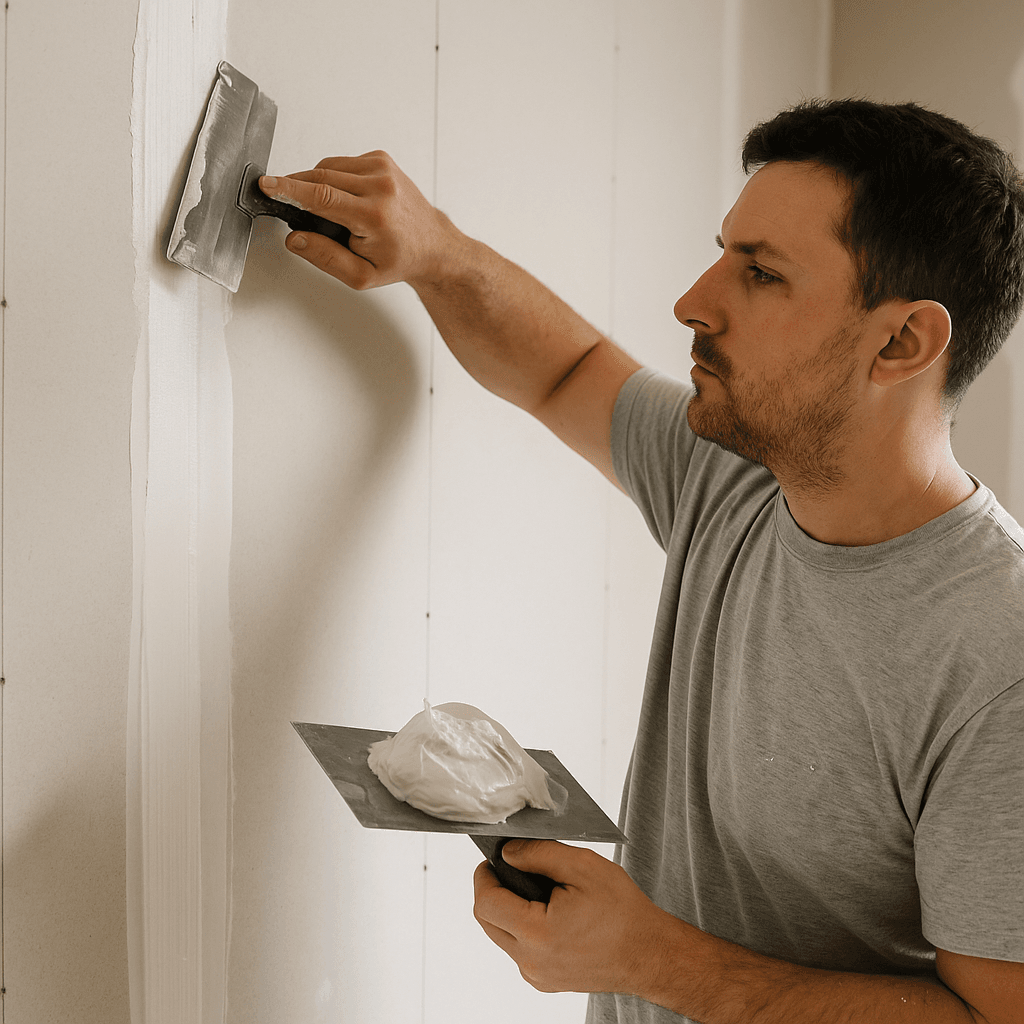
Add a little water—just a cup or so for a full bucket—and mix it with a heavy-duty drill and paddle mixer until it looks like creamy cake frosting or mayonnaise. You want it smooth enough to spread like butter but thick enough that it doesn’t slide off your hawk (that’s the flat metal plate you hold the mud on).
Also, let’s talk about your tools. Please, for the love of your walls, do not use those plastic putty knives. They bend, they leave jagged edges, and they are impossible to clean. Invest in a stainless steel 6-inch taping knife for embedding tape and a 10-inch or 12-inch knife for your feathering coats. It makes a world of difference.
The Do’s: How to Get That Pro Finish
Alright, let’s get into the mechanics of it. When you are working on a home renovation in Davis County or fixing a Basement in Utah County, the principles remain the same.
Do Apply Thin Coats
This is the golden rule. You cannot finish a joint in one pass. It takes three coats.
- Coat 1: Embeds the tape.
- Coat 2: Covers the tape and fills the bevel.
- Coat 3: Feathers the edges out wide so the hump disappears.
If you try to pile it on thick to “get it done faster,” you will end up with deep cracks as it dries. Mud shrinks. Thick mud shrinks a lot. Thin layers dry faster, shrink less, and are infinitely easier to sand.
Do “Feather” Your Edges
Feathering is a fancy term for applying more pressure on the outside edge of your knife. The goal is to make the layer of mud vanish into the drywall paper so you can’t feel where the mud ends and the board begins. If you leave a “hard edge” or a ridge, you’ll see it through the paint, no matter how many coats of primer you use.
Do Use a Shop Light
Here is a trick we use at Utah Drywall & Repair. Turn off the overhead lights and set up a bright work light at a sharp angle to the wall. This is called “raking light.” It will cast long shadows on every bump, scratch, and ridge. It looks scary, I know—it highlights every flaw—but it allows you to fix those imperfections while the mud is still wet or during the sanding phase.
The Don’ts: Saving Your Sanity
There are a million ways to mess up drywall, but these specific mistakes are the ones that make you want to tear your hair out.
Don’t Overwork the Mud
Stop playing with it. Homeowners have a tendency to keep swiping over the same spot, trying to make it perfect. Every time you pass your knife over drying mud, you pull up little chunks and create drag marks. Put it on, smooth it once, and walk away. You can fix ugly spots in the next coat, but you can’t fix mud that has started to skin over.
Don’t Ignore the “Clickers”
If you are running your knife along the wall and you hear a click-click sound, stop immediately. That sound usually means a screw head is sticking out just slightly above the surface of the drywall. Don’t just bury it in mud; the metal will eventually rust or pop the mud off later. Get your screwdriver and sink that screw properly below the surface.
Don’t Pour Dust Down the Drain
This seems obvious, but after a long day of sanding, it is tempting to wash your tools in the utility sink. Drywall compound is basically gypsum dust and glue. It settles in your P-trap and turns into a rock-hard clog that your plumber will charge you a fortune to fix. Wash your tools outside with a hose, or use a bucket system where you let the solids settle at the bottom and pour the clear water off the top.
The “Utah Factor” and Texture
Here’s the thing about living along the Wasatch Front—our climate is incredibly dry. While that helps mud dry quickly, it can sometimes dry too quickly.
If you are skimming a large wall, the mud might dry out before you can smooth it, causing it to roll up under your knife. In the summer, keep your windows closed to stop drafts from drying the mud unevenly.
And then there’s texture. In older homes in Salt Lake, you might see smooth walls, but a lot of newer builds in Utah County have orange peel or knockdown texture. Matching an existing texture is, frankly, the hardest part of the job.
You can buy those spray cans of texture for small patches, but they rarely match perfectly. They tend to spray out differently depending on how much is left in the can. If you use one, test it on a piece of cardboard first to dial in the spray pattern before you aim it at your living room wall.
The Reality of Sanding
Let’s be real for a second—nobody likes sanding. It’s dusty, it’s tiring, and it gets everywhere. Even if you seal off the room with plastic, that fine white powder somehow finds its way into your kitchen cabinets three rooms away.
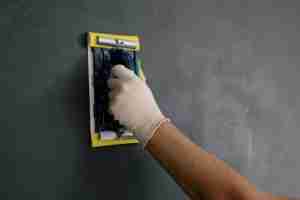
A major “Do” here is to use a sanding sponge for corners and a pole sander for the flats. But be gentle. The goal is to scuff down the high spots, not to sand through the paper of the drywall. If you see the paper getting fuzzy, you’ve gone too far.
For smaller repairs, consider “wet sanding.” You use a damp sponge instead of sandpaper to wipe away high spots. It creates zero dust. It’s slower, sure, and it doesn’t get things quite as flat as sandpaper, but for a patch in a hallway, it keeps your house breathable.
Knowing When to Call in Reinforcements
Look, DIYing a small patch where a doorknob went through the wall is a great weekend project. It’s satisfying to fix something yourself. But if you are looking at finishing an entire basement, or you have water damage on a Ceiling, the difficulty curve spikes dramatically.
Ceilings are physically exhausting—working with your arms above your head for hours is no joke—and gravity is working against you, pulling that wet mud right down onto your face. And if the lighting in the room is bright, every single seam that isn’t perfectly flat will show up as a shadow.
There is no shame in admitting that some jobs are just too big or too messy to tackle alone. Sometimes, the cost of buying the tools, the mud, and the time you spend (plus the potential frustration of a finish you aren’t happy with) outweighs the cost of hiring a pro who can knock it out in a fraction of the time.
At Utah Drywall & Repair, we’ve seen it all. We handle the mess, the dust, and the tricky angles so you don’t have to. We know how to handle the local climate conditions to ensure the finish lasts for decades. Whether you need a quick repair or a full installation, we are here to help you get your home looking pristine.
Request a Free Quote today and let’s get those walls looking perfect.