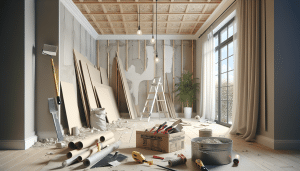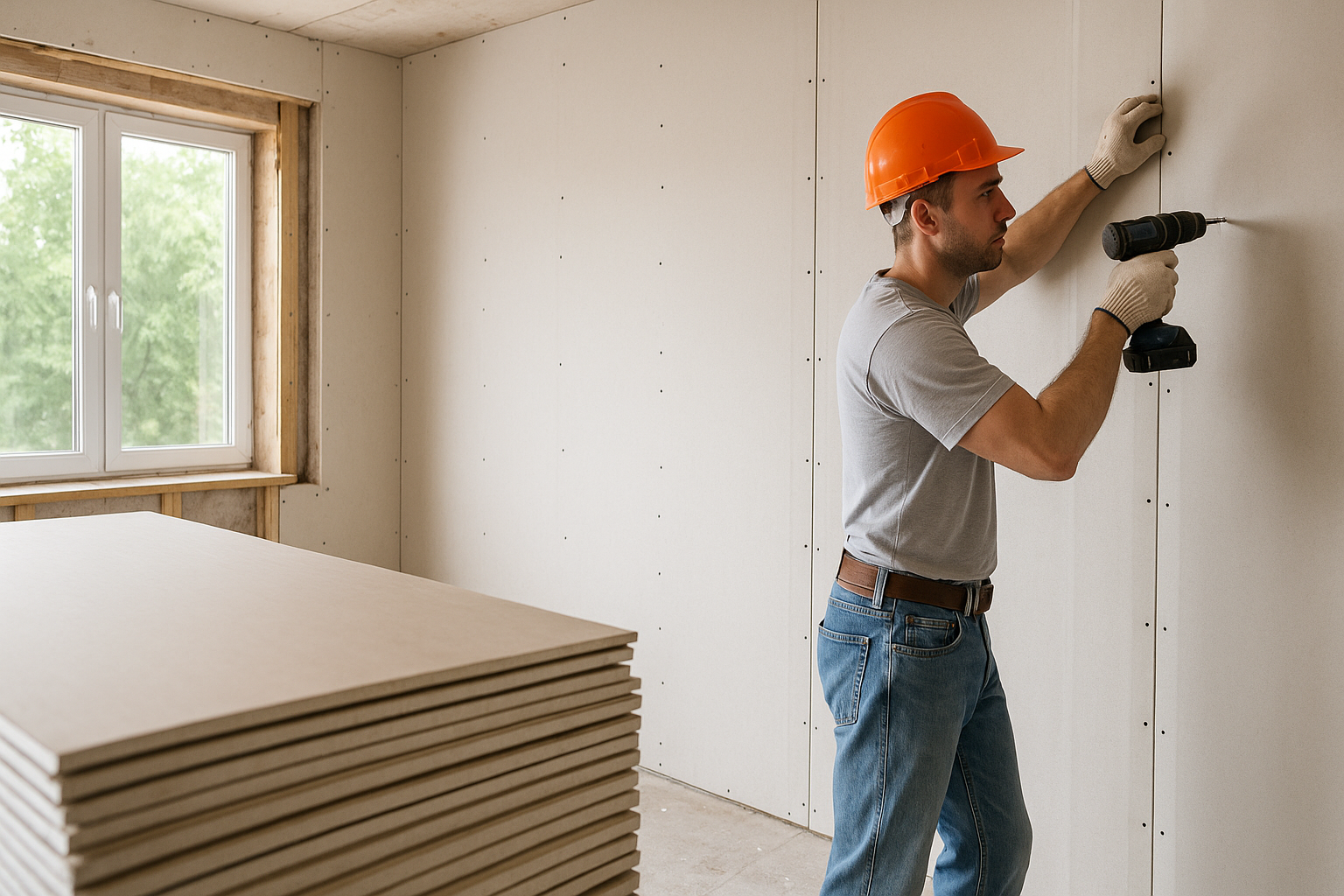
Let’s be honest for a second; staring at bare wall studs in your Basement can make you feel like a true pioneer, but figuring out how to actually cover them up is a whole different story. Whether you are finishing a new room in Salt Lake County or fixing a massive hole down in Utah County, drywalling is one of those tasks that looks deceptively effortless on home improvement television. Hanging the board itself isn’t exactly rocket science, but making those seams disappear so your paint looks flawless requires a decent amount of patience, some heavy lifting, and a few insider tricks.
Contents
So, You Want to Tackle the Drywall Yourself?
You know what? I completely get the appeal of doing it yourself. You grab a stack of sheetrock from the local hardware store, haul it back to Davis County in the back of a truck, and imagine slapping it up in a single, highly productive weekend. It sounds like a highly satisfying project. But here is the thing: drywalling is naturally full of mild contradictions. It is incredibly cheap to buy the materials, yet fixing a botched job will cost you plenty in time and sanity. It is physically exhausting to lift the panels, but it also requires a surgeon’s delicate touch to feather out the joint compound later on.
I tell people all the time that hanging drywall is a game of millimeters. If you are off just a tiny bit on your measurements, you end up with massive gaps. And trust me, you do not want to fill a one-inch gap with mud. It will shrink, crack, and generally make a mess of your beautiful new room. But do not let that scare you off entirely. With the right techniques, a solid plan, and maybe a patient buddy to help lift the heavy stuff, you can definitely make this happen.
The Non-Negotiable Tools of the Trade
Before we talk about the heavy lifting, let me explain the gear. You cannot just use a regular kitchen butter knife and a standard Phillips screwdriver for this. Well, you could, but you would be miserable. Real drywall installation requires specific tools that make the whole process significantly smoother.
| Tool Name | What It Actually Does | The Honest Truth |
|---|---|---|
| Drywall T-Square | Helps you draw perfectly straight lines across a large 48-inch board. | You will use this constantly. Don’t buy a cheap plastic one; get a solid metal version. |
| Utility Knife | Scores the paper facing so the gypsum core snaps cleanly. | Buy extra blades. A dull blade ruins the paper edge instantly. |
| Dimpler Bit | Sinks the screw slightly below the paper surface without breaking it. | This is an absolute lifesaver. Do not try to attach drywall without one. |
You will also need a reliable Tape measure, a drill, a drywall saw (often called a jab saw) for cutting out electrical outlets, and your Mudding tools. A basic mud pan and various sizes of Taping knives—usually a 6-inch, 10-inch, and 12-inch—will get you through most standard room projects.
The Prep Work Nobody Talks About
Let me share a little secret that professional Drywall Contractors understand: your finished wall is really only as good as the raw framing underneath it. Utah is famous for its ridiculously dry climate, right? We all love the powder snow in the winter, but that sheer lack of humidity wreaks absolute havoc on wood framing over time.
Take a long straight edge or a level and run it horizontally across your wall studs. You are closely looking for studs that bow out or push in. If you attach a perfectly flat sheet of rigid gypsum to a wavy, warped wall, the finished wall is going to be wavy. It is just basic physics. If a stud bows out too much, you might need to plane it down. If it bows inward, you can use thin cardboard shims to bring it flush with the adjacent boards.
Also, carefully check your nail plates. Those are the little metal protective plates plumbers and electricians hammer onto studs to protect pipes and wires from your rogue Screws. Make sure they sit as flush as possible. Taking just an hour to fix your framing now will save you agonizing days of trying to hide a massive hump in your wall with drywall mud later.
Hanging the Board: Defying Gravity
Alright, time to actually put the heavy boards up. Always, always start with the Ceiling. Yes, ceilings are the worst. They are awkward, heavy, and gravity is actively fighting you the entire time. If you are doing this solo, go rent a drywall hoist. Just rent it. Your back will thank you, and you will not drop a 50-pound sheet of chalky rock on your head.
Once the ceiling is firmly up, you can move to the walls. Hang the top piece first, pushing it tight against the new ceiling. Then hang the bottom piece. Here are a few essential rules for hanging:
- Perpendicular is usually better. Run the long edge of the drywall perpendicular to the joists or studs. It makes the wall structurally stronger and hides uneven framing much better.
- Don’t line up the seams. Stagger your joints like stair steps. If you leave a continuous seam running from floor to ceiling across multiple sheets, it creates a serious weak point that will almost certainly crack when the house settles.
- Watch your screws. This is exactly where that dimpler bit comes in handy. You want the screw head to create a tiny little crater in the paper face, but you absolutely cannot tear the paper. The paper tightly holds the entire board together. If you rip it, simply pull the screw out and try again a few inches away.
You generally want screws spaced about every 16 inches on walls, and every 12 inches on ceilings. Sink them straight in, avoiding weird angles.
Taping and Mudding: Where Patience is Tested
Honestly, hanging the drywall is a physical workout, but taping and mudding is a true art form. This is the exact part that scares most homeowners away from attempting Residential drywall repairs themselves. The ultimate goal here is to make two separate boards look like one continuous, perfectly flat surface.
First, you fill the gaps and apply your tape. You essentially have two main choices for tape: paper or fiberglass mesh.
- Fiberglass mesh is inherently sticky on one side, which makes it super easy to apply directly to the wall seams. However, it is thicker and technically not quite as strong as paper. If you use mesh, you absolutely must use a “setting type” compound (the powder you mix with water) for the first coat, because it dries much harder and prevents cracking.
- Paper tape is the trusted, traditional choice. You apply a thin layer of wet mud, press the paper into it, and then tightly squeeze the excess mud out from underneath using your 6-inch knife. It certainly takes practice, but it creates a dramatically stronger joint.
Once taped, you are going to systematically apply thin layers of mud. Let me be clear: you cannot do this in one thick, heavy coat. It will inevitably crack, bubble, and look terrible. You need three distinct coats. The first coat embeds the tape. The second coat widens the joint to camouflage the slight hump. The third coat (often called the skim coat) feathers the edges out completely smooth. Let each coat dry entirely before adding the next layer.
Sanding Without Losing Your Mind
We really need to talk about the dust. Drywall dust is insidious. It literally gets everywhere. It will float from your basement all the way up the stairs to your kitchen and silently settle on your breakfast cereal if you are not incredibly careful. Before you sand, heavily seal off your doorways with plastic sheeting and turn off your HVAC system entirely.
Use a specialized sanding sponge for the tight corners and a pole sander for the big flat seams. You are simply knocking down the high spots and smoothing the delicate edges where the dried mud meets the paper. Do not over-sand! If you impatiently sand down into the paper tape itself, it will fuzz up, and you will have to start the mudding process all over again.
Pro tip: Shine a harsh, bright work light parallel to the wall while you sand. Every tiny ridge, bubble, and shadow-casting imperfection will instantly reveal itself. If the wall looks perfectly smooth under a harsh raking light, it will look absolutely flawless under normal room lighting. Once you are completely happy with the finish, carefully wipe the walls down with a slightly damp sponge to remove the lingering fine dust before you start priming.
Ready to Skip the Dust and Call the Pros?
Let’s face it, tackling your own drywall project is a massive undertaking. Between hauling giant sheets through tight doorways, endlessly mixing mud, and dealing with the inevitable cloud of fine white dust, it is more than enough to make anyone second-guess their weekend DIY ambitions. While doing it yourself can be a great learning experience, sometimes you just want the job done quickly, cleanly, and flawlessly.
If you are staring at those bare studs right now—or maybe looking at a taping job that did not go quite as perfectly as planned—Utah Drywall & Repair is here to help. We handle everything from minor small patches and ceiling water damage restoration to full basement finishes and new home additions across Salt Lake County, Davis County, and Utah County. We bring the right tools, the muscle, and the years of hands-on experience to make those ugly seams vanish like magic, leaving you with perfectly smooth walls ready for a fresh coat of paint.
Save your precious weekend, protect your back, and let us gracefully handle the heavy lifting and the dusty details for you.