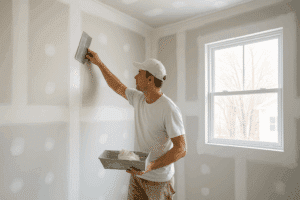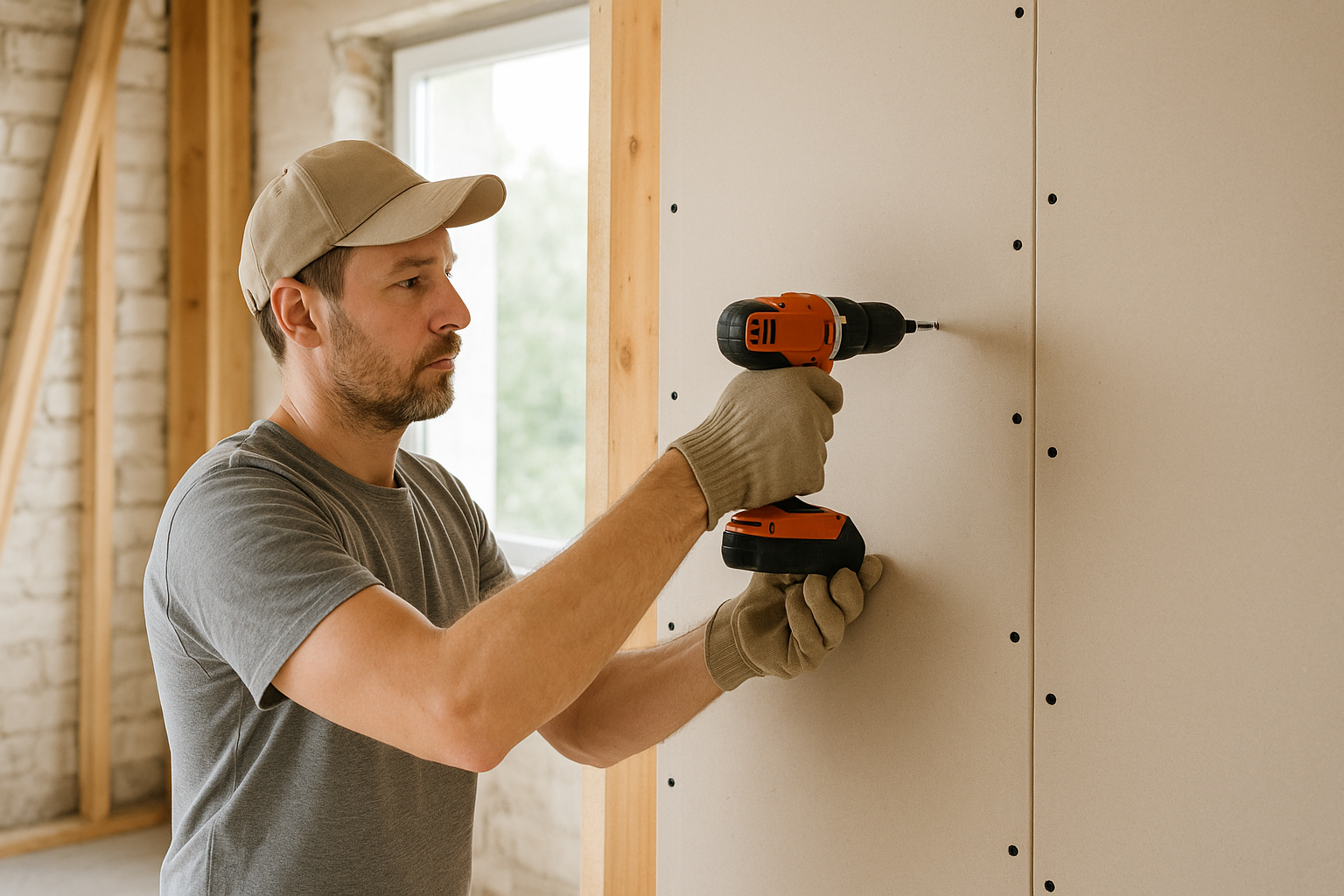
Let’s be honest, staring at bare wood studs in your unfinished Basement can make you question every life choice that led to a DIY home renovation. But Hanging gypsum board doesn’t have to be a soul-crushing weekend chore that leaves your back aching and your spirits broken. With a little patience and the right approach, turning that empty space into a finished room is totally manageable for the average homeowner.
Contents
What Exactly Are We Hanging Here?
Gypsum board, drywall, wallboard, Sheetrock. We throw these terms around like they mean different things, but they all refer to the same basic building material. It is just a core of crushed gypsum rock sandwiched between two thick layers of paper. Sounds heavy, right? Honestly, it is. Moving a standard sheet of drywall around is a workout.
Understanding what this material is helps you treat it right. Gypsum is soft. The paper holds the tension. If you tear the paper, you lose the strength. It really is that simple.
You know what? The climate matters too. Homeowners in Salt Lake County and Utah County know how dry our mountain air gets. That crisp, dry air actually works in your favor when the wet phase of the job begins. Things dry much faster here than they do on the coast. But our local clay soils also mean our houses shift. Houses settle. That movement means your gypsum board installation needs to be solid, or you will end up with cracked walls the following spring.
Gearing Up With the Right Stuff
Please don’t just grab a hammer and a handful of rusty nails. Nailing drywall is a relic of the past. Nails pop out when the wood framing shrinks. You want Screws. Coarse-thread drywall screws.
Let me explain. You need gear that makes the job easier, not harder. A good project starts with a trip to the hardware store to gather some specific supplies.
| Tool Category | Specific Gear | Why You Need It |
|---|---|---|
| Fastening | Dewalt Drywall Screw Gun | Drives screws to the perfect depth without tearing the paper. |
| Cutting | Stanley Utility Knife & T-Square | You don’t saw drywall. You score it and snap it. |
| Finishing | USG Joint Compound & Hyde Knives | To cover the seams and make the wall look like one solid piece. |
You do not need to spend a fortune on tools. However, spending a few extra dollars on a decent Taping knife will save you hours of frustration later. A cheap, stiff knife will leave lines in your mud. You want something with a little flex.
The Art of the Hang: Putting Wood to Wall
Hanging drywall is essentially a giant, dusty jigsaw puzzle. You measure the space, cut the piece, and screw it to the studs.
Here is a funny thing about hanging drywall. People say it is a one-person job. That is a lie. Well, if you rent a panel hoist, it is. But if you are doing this by hand, call a friend. Bribing a buddy with pizza is way cheaper than replacing a broken sheet of drywall.
When you start putting the panels up, keep a few smart habits in mind:
- Hang ceilings first. Always do the Ceiling before the walls. The wall panels will actually help support the edges of the ceiling panels.
- Measure twice, cut once. We all know the saying. But seriously, wasting a sheet of rock because you misread your Tape measure hurts the wallet.
- Stagger your joints. Do not line up your vertical seams like a grid. Stagger them like bricks. This makes the entire wall stronger and less prone to cracking.
- Watch your screw depth. The screw head needs to sink just below the surface of the paper to create a tiny dimple. If you break the paper, pull the screw out and try again a few inches away.
Have you ever tried to find a stud behind a piece of drywall you just hoisted into the air? It is a nightmare. Do yourself a favor. Mark the stud Locations on the floor and ceiling before you lift the panel.
The Magic Trick: Scoring and Snapping
Cutting gypsum board sounds like a messy, dust-filled nightmare. But it is actually the most satisfying part of the job.
You do not use a saw for straight cuts. You use a sharp utility knife. You lay the T-square across the board, press the knife into the paper, and drag it down. You score the paper. Then, you stand the board up and give it a firm tap behind the cut. Snap. The rock core breaks perfectly along the line. You slice the paper on the back, and you have a clean cut.
It feels like magic the first time you do it.
Of course, making holes for electrical outlets is a different story. That requires a jab saw. You will make a mess doing that. Just accept the dust. Dust is a part of the process.
Mud, Tape, and Patience
This is the part that scares DIYers the most. Taping. Mudding. Finishing. Whatever you want to call it, this phase is where you hide the seams and make everything look seamless.
The secret to flawless drywall finishing is simple: do not try to do it all at once.
You need mud. Lots of mud. But you apply it in thin layers. Putting massive amounts of joint compound on the wall will just result in massive amounts of Sanding later. Nobody likes sanding. The dust gets everywhere. It coats your hair, ruins your clothes, and sneaks into your lungs. Keep the mud thin.
First, you fill the seam with mud and press the tape into it. Squeeze out the excess. Let it dry. Yes, you have to walk away. You cannot rush this.
The next day, you come back and apply a wider coat of mud over the tape. Feather the edges. The goal is to blend the seam into the rest of the wall. Let it dry. Then, you do it one more time with an even wider knife.
Is it tedious? Absolutely. Does it require a delicate touch? Yes. But it is not impossible.
Knowing When to Pass the Trowel
Sometimes, despite your best efforts, the wall just looks lumpy. Or maybe you are dealing with a massive vaulted ceiling in a Davis County home, and balancing on a ladder with a heavy sheet of rock suddenly feels like a terrible idea.
There is zero shame in admitting that a project has grown beyond your comfort zone.
Hanging a few sheets in a small closet is a great weekend project. Tackling a 1,500-square-foot basement finish is a massive undertaking that can swallow your free time for months. Local Drywall Repair and installation experts do this all day, every day. We have the tools, the muscle, and the muscle memory to tape a room in a fraction of the time it takes a beginner.
Your time is valuable. Sometimes, handing the heavy lifting over to professional Drywall Contractors is the smartest tool you can use. Whether you need a fresh installation, a patch job, or just someone to fix a taping project gone wrong, Utah Drywall & Repair is ready to step in.
We serve homeowners across Salt Lake County, Davis County, and Utah County. We make the mess disappear, leaving you with perfect, paint-ready walls.