
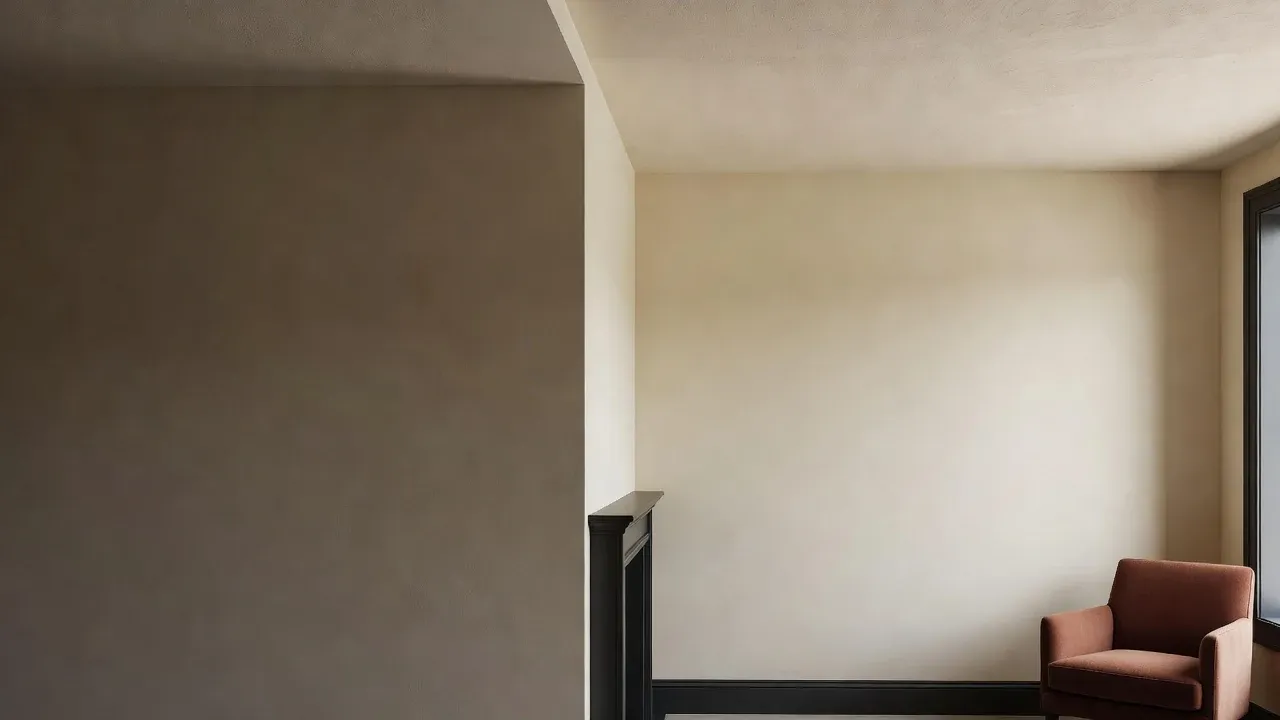
Texture changes how a wall or ceiling catches light and how a repair meets the surrounding surface. Utah Drywall & Repair applies and matches texture as part of a complete finish plan, after the board, tape, and compound underneath are ready.
Request a Texture Estimate or call 801-406-6350.
Texture Work This Service Covers
- Matching texture around a wall or ceiling repair
- Applying texture to new drywall
- Orange peel texture
- Knockdown texture
- Smooth-wall finish preparation
- Skip trowel and other hand-applied finish work
- Ceiling texture after repair or popcorn removal
- Broader wall or ceiling refinishing when a narrow blend would remain obvious
If the damaged surface still needs a patch, start with drywall repair. If tape, mud, corners, or skim work are the main need, see drywall finishing.
Matching an Existing Texture Is a Comparison Process
The texture name is only the beginning. Two surfaces can both be called orange peel or knockdown and still look different because of material, pressure, nozzle setting, timing, hand technique, age, paint buildup, and previous repairs.
The team assesses:
- pattern size and density;
- raised and flattened areas;
- direction and hand movement;
- paint layers over the texture;
- the repair boundary and available blend width;
- direct and side lighting; and
- whether the surrounding surface is consistent enough to match locally.
A test on a separate surface or controlled area may help establish the pattern. An exact match should not be promised before the existing finish is seen.
Common Texture Options
Orange peel
Orange peel is a sprayed pattern made from many droplets. Matching depends on droplet size, coverage, material consistency, pressure, and distance. A repair may need a wider fade so the new spray does not stop at a hard line.
Knockdown
Knockdown begins with a heavier sprayed pattern, followed by a timed flattening step. Wait time, tool angle, pressure, and pattern size affect the result. Old layers of paint can make the existing islands look softer or flatter than fresh texture.
Smooth wall
Smooth is not the absence of work. It requires careful tape and compound control because the final plane has no pattern to distract from ridges, low areas, or patch edges. Strong side lighting can reveal small surface changes.
Skip trowel
Skip trowel is hand-applied, so pressure, material, angle, and movement shape the pattern. Matching a previous applicator’s work may require a broader transition or a defined sample.
Popcorn texture
Popcorn ceilings involve separate safety, removal, and refinish decisions. Do not disturb older texture when testing may be appropriate. See popcorn ceiling removal before choosing the final ceiling finish.
Local Blend or Whole Surface?
A local blend may be reasonable when
- the existing texture is consistent;
- there is enough surrounding area to fade the pattern;
- paint buildup is not extreme;
- the repair does not cross several visual zones; and
- lighting is not likely to emphasize a narrow transition.
A whole wall or ceiling may be cleaner when
- several repairs overlap;
- the existing texture varies substantially;
- previous patches already show;
- the owner wants to change texture style;
- a narrow blend would create a picture-frame edge; or
- the surface needs broader skim or finish correction.
The estimate should explain the tradeoff rather than defaulting to the largest scope or promising a local match that has not been tested.
Texture Process
1. Identify the pattern and finish goal
Determine whether the job is a match, a new application, or a texture change. Photos should include a close view and a wider view under normal room light.
2. Complete the drywall beneath it
Patches, tape, compound, corners, and sanding should be ready before texture. Texture should not be used to hide weak backing, loose tape, or unfinished joints.
3. Protect the work area
Spray or hand-applied texture can reach beyond the target. When required, the team uses tarps and appropriate containment and protection measures for floors, walls, fixtures, furnishings, and occupied areas.
4. Establish material and application settings
Material consistency, tool setup, pressure, distance, timing, and hand movement are adjusted to the selected finish. A sample can help compare the fresh pattern with the existing surface.
5. Apply and blend
The work area may extend beyond the repaired board so the texture can transition into the surrounding finish.
6. Confirm primer and paint handoff
Fresh texture and compound need the correct primer and coating plan. Paint color and sheen can make a good texture transition more or less visible. Paint matching can be included when it is part of the agreed scope.
Guaranteed Workmanship
Utah Drywall & Repair guarantees its workmanship on the drywall and finish scope the team performs. The written estimate identifies the repair, installation, texture, paint matching, and finish work included for the project.
Common Questions
Can you match orange peel or knockdown texture?
Yes, texture matching is part of the service. The realistic scope depends on the existing pattern, paint buildup, repair size, blend width, and light. A sample or broader finish area may be recommended.
Can you texture over a bad patch?
Texture should not be the fix for a raised, loose, cracked, or unsupported patch. The drywall and compound beneath it should be corrected first.
Is smooth wall easier than texture?
Not usually. Smooth walls expose surface variation, especially under side light or higher-sheen paint. The finish work underneath often needs more control.
Does the texture include paint?
Not automatically. The estimate should state whether the scope includes texture only, primer-ready preparation, primer, or paint matching.
Can one repaired spot be made completely invisible?
That should not be guaranteed. The goal is a well-built repair and a controlled blend. Texture age, paint sheen, room lighting, and prior work may still affect how the area reads.
Compare the Existing Pattern Before Choosing the Scope
Send close and wide photos, note whether the surface is wall or ceiling, and describe whether you want a match or a new finish.
Request a Texture Estimate or read The Art of Drywall Texturing.