
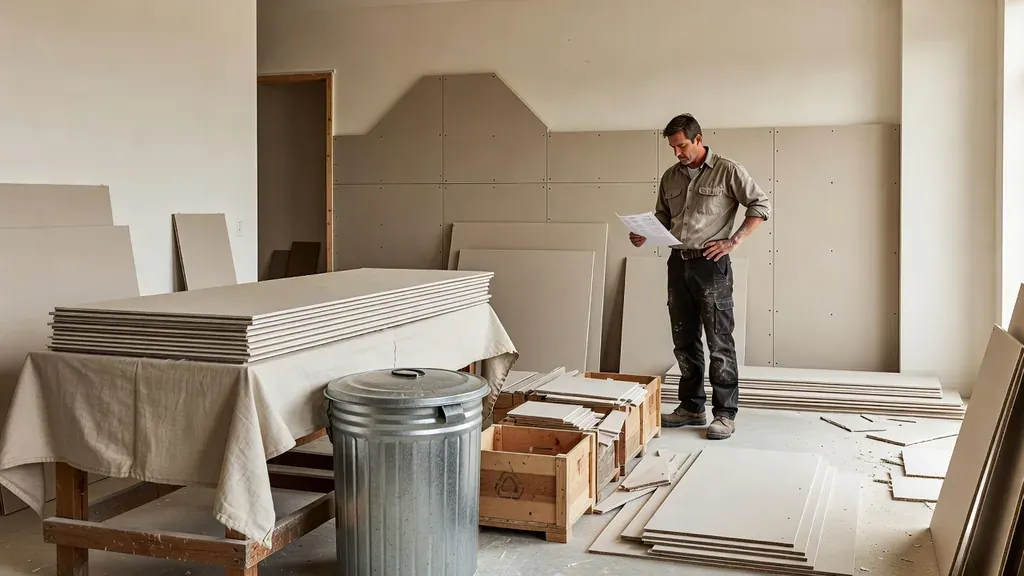
“Sustainable drywall” is not one magic green panel. Better results usually come from a series of ordinary decisions: preserve sound walls, specify the right product, order accurately, protect material from moisture, plan cuts, separate clean scrap, and build a finish that does not need to be torn out and repeated.
| Project decision | Evidence or question to request | Practical benefit |
|---|---|---|
| Preserve or replace | Is the existing wall dry, stable, and compatible with the new work? | Avoids unnecessary material and demolition waste |
| Select a panel | Current product data, EPD, regional availability, and assembly requirements | Supports a documented choice without sacrificing performance |
| Plan quantities | Field measurements, cut layout, damage allowance, and storage conditions | Reduces over-ordering and moisture-damaged stock |
| Manage scrap | Local processor rules for clean gypsum, paper, fasteners, and coatings | Prevents a recycling plan that the receiving facility will reject |
Professional note: Environmental labels are useful only when the products, declared units, life-cycle stages, geography, and dates are comparable. Durability and correct installation still matter.
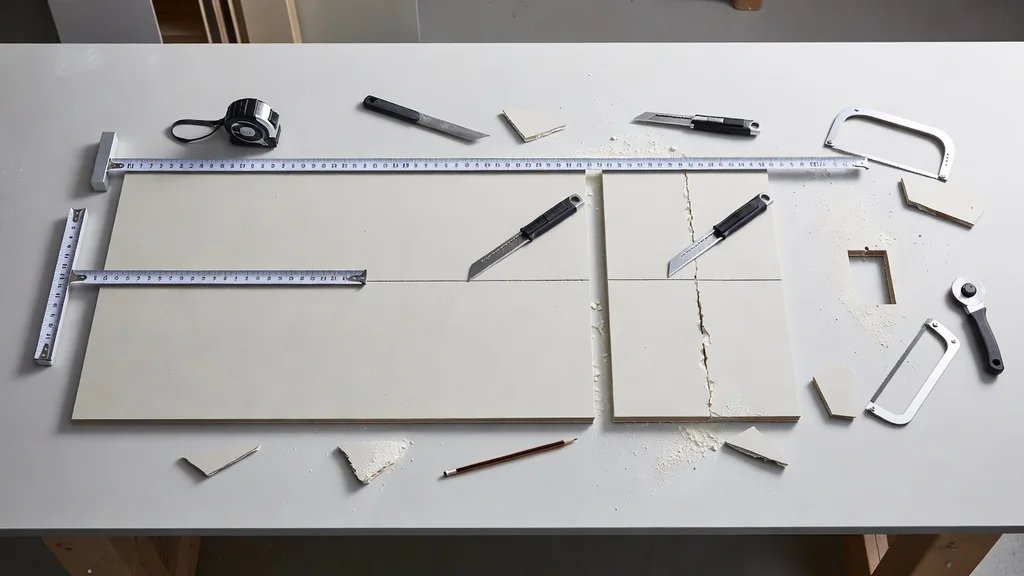
Product claims still matter, but the useful questions are specific. What does the environmental product declaration cover? Is the panel appropriate for this location? Can clean scrap actually be recycled near the project? Will a long hauling trip erase much of the benefit?
Start by keeping what still works
The lowest-waste panel is often the one already on the wall.
Before demolition, determine whether the problem is cosmetic, localized, or assembly-wide. Small holes, loose tape, isolated fastener defects, and limited surface damage may be repairable. Widespread moisture damage, contamination, failed substrates, and incorrect assemblies can require replacement.
Selective removal takes more planning than swinging a hammer through the whole room, but it can reduce material, disposal, dust, and finish work.
Specify the right panel for the location
Using one board type everywhere is simple, not necessarily durable.
- Standard gypsum board fits many dry interior walls and ceilings.
- Mold- and moisture-resistant products may be appropriate in damp-prone interior locations when the complete assembly and local requirements allow them.
- Fire-resistive Type X or Type C panels belong in assemblies that specify them.
- Abuse-resistant, impact-resistant, shaft-liner, glass-mat, and exterior gypsum products have specialized roles.
An under-specified panel can fail early. An over-specified panel may add cost and embodied impact without improving the project. Match the product to the actual exposure and assembly.
Use transparent product information
Environmental Product Declarations
An Environmental Product Declaration, or EPD, reports environmental impacts using a defined life-cycle assessment method. It is useful for comparing products only when the declarations use compatible standards, scopes, and life-cycle stages.
An EPD is not a blanket statement that a product is environmentally harmless. Read the declared unit, geography, date, plant coverage, and included stages.
Material and health documentation
Project teams may also review product ingredient disclosures, safety data sheets, emissions certifications, and manufacturer installation requirements. The relevant document depends on whether the concern is embodied impact, installer safety, indoor emissions, durability, or a building-certification credit.
Recycled content
Recycled content can be useful, but a percentage does not tell the whole story. Product performance, transport, plant efficiency, service life, and end-of-life options also matter. Ask for current manufacturer documentation instead of relying on an old marketing page.
Reduce waste before the panels arrive
Measure the actual surfaces
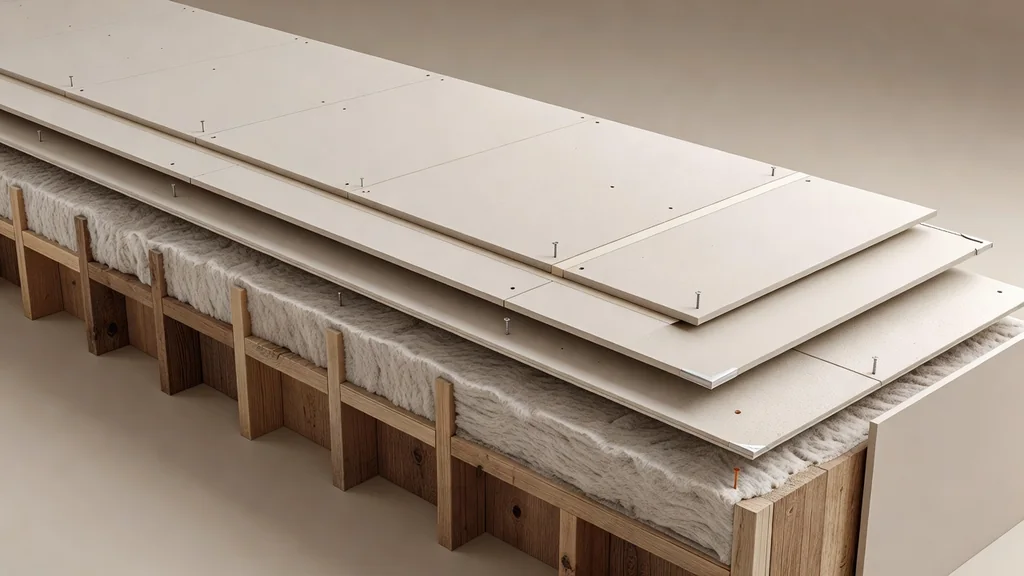
Separate wall and ceiling quantities. Account for panel orientation, openings, soffits, tall walls, stairwells, and access constraints. Add a reasonable allowance for cuts and damage rather than ordering by a rough room-floor multiplier.
Choose panel sizes around the layout
Longer panels can reduce butt joints and finishing, but only if they can be transported safely into the room and installed without damage. Standard-size panels may create less waste on a chopped-up room with many openings.
Plan repeated cuts
Use offcuts from doors, windows, and short walls where they fit without creating bad joint locations. Do not turn every scrap into a patchwork wall. Extra seams require tape, compound, labor, sanding, and future crack risk.
Store material correctly
Keep panels flat, dry, supported, and protected from jobsite damage. Wet or bowed board can become waste before installation starts.
Separate clean gypsum scrap
Gypsum recycling programs usually need clean material separated from other construction debris. Requirements vary by processor and market.
Common contaminants include:
- Fasteners and metal trim
- Wood and insulation
- Plastic and general trash
- Wet or mold-affected material
- Painted demolition debris
- Materials that may contain lead or asbestos
New, clean installation offcuts are generally easier to manage than mixed demolition waste. Confirm what the receiving facility accepts before setting up bins.
Recycling is local
Drywall is bulky. The Gypsum Association notes that transportation distance and multiple hauling trips can reduce or negate environmental benefits. A recycler that is technically available but hundreds of miles away may not be the practical answer for a small residential job.
Ask:
- Does the facility accept new scrap, demolition board, or both?
- What contaminants are prohibited?
- Is painted or textured material accepted?
- Are testing or documentation required for older buildings?
- What are the minimum load and fees?
- How far will the material travel?
Do not crush gypsum and apply it to soil without confirming local rules, material cleanliness, and a legitimate use. Painted or demolition drywall can carry contaminants that new scrap does not.
Durability is part of sustainability
A wall that survives normal use is better than one replaced twice.
Durability depends on:
- Correct framing and panel thickness
- Appropriate fasteners and spacing
- Moisture control
- Suitable corner protection
- Proper joint compound and tape
- Enough drying time
- Compatible primer and paint
- Backing for heavy fixtures
- Repairable texture and color choices
Our drywall installation guide covers the workmanship side. For wet or mold-prone locations, read the mold-resistant drywall guide and remember that moisture-resistant board does not fix a leak.
Indoor work practices matter too
Control dust, ventilate according to product requirements, and use compatible compounds, primers, sealants, and coatings. Low-emitting product certifications may be relevant for occupied homes, schools, healthcare settings, and certification programs.
Good containment and cleanup reduce exposure during the project. They do not turn a poorly selected product into the right one.
A practical lower-waste checklist
- Repair sound existing drywall where feasible.
- Use the correct panel for the exposure and assembly.
- Review current EPDs and product documentation when sustainability goals matter.
- Measure walls and ceilings before ordering.
- Choose panel sizes around access and layout.
- Protect panels from moisture and jobsite damage.
- Separate clean scrap only after confirming a receiving option.
- Avoid unnecessary seams and decorative complexity that make future repairs difficult.
- Photograph concealed assemblies for future maintenance.
- Keep leftover paint and finish records for clean repairs.
The strongest sustainability claim is a documented plan, not a green adjective. If you are planning a remodel or repair in northern Utah, request an estimate and tell us whether material transparency, waste separation, or preserving existing walls is a priority.
Frequently asked questions
What makes a drywall project more sustainable?
Preserving sound walls, specifying the correct product, measuring accurately, preventing moisture damage, reducing unnecessary seams, and separating accepted clean scrap often matter more than one green label. Careful cutting and measuring helps before waste exists.
Can all old drywall be recycled?
No. Acceptance varies by processor, and demolition material may contain paint, mold, fasteners, asbestos, lead, or other contaminants that clean installation scrap does not.
What does a drywall EPD tell me?
An environmental product declaration reports life-cycle impacts under a defined method and scope. Compare only compatible declarations and review the declared unit, geography, date, plant coverage, and included stages.